
Strengthen Safety,
Financial & Reputational Risk Performance
Safety culture and risk performance are shaped by the decisions people make when conditions become complex, priorities compete, and consequences are real. Those consequences may affect employee safety, financial performance, regulatory compliance, or organisational reputation.
We help organisations strengthen the leadership behaviours that create greater consistency, accountability, and sound decision-making when the stakes are highest.

Risk Is Not Lost in the System. It Is Decided in the Moment.
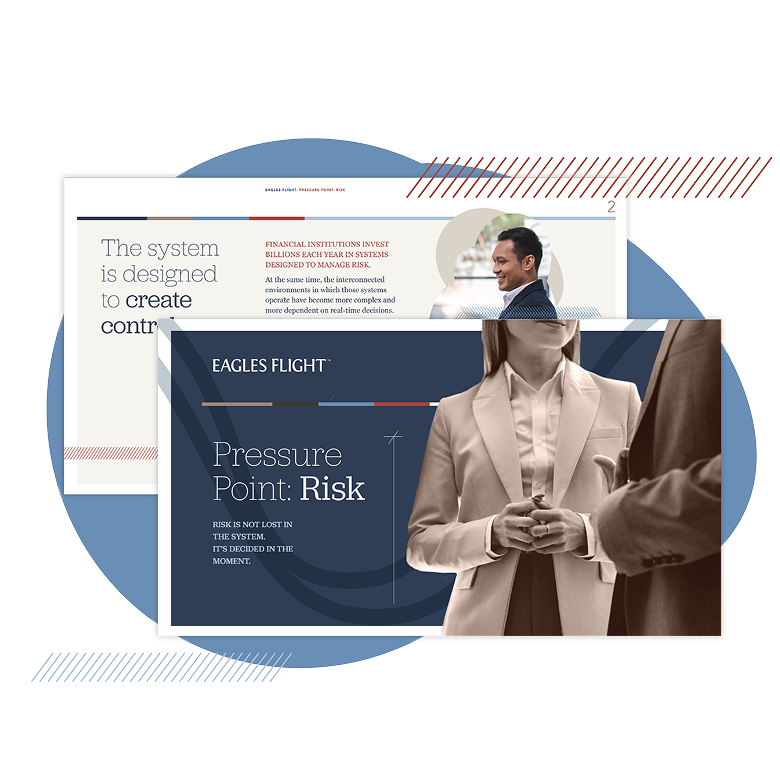
Organisations invest significant resources in policies, procedures, controls, and governance structures designed to manage risk. Yet variation often persists, even when standards are clearly defined.
Risk rarely emerges because standards do not exist. It emerges when similar situations are handled differently and competing priorities begin to influence everyday decisions.
Explore where variation enters the system and how leaders can strengthen consistency before small deviations become larger performance risks.
Client Stories
Organisations pursue execution excellence in different ways, but the common thread is helping people make decisions, apply standards, and follow through more consistently across the organisation.

Halliburton
Thirty days of discovery across 20 countries and more than 1,000 interviews surfaced the same belief from field hands to site managers: incidents just happen. Eagles Flight built an immersive experience that shifted safety from a compliance mindset to personal ownership, training 17,000+ employees and leaders across 20 countries and certifying internal trainers to sustain it.

Merck
Merck’s manufacturing network already had the systems, audits, and rules, but global discovery revealed employees didn’t believe safety outcomes were within their control. Eagles Flight built Safe by Choice to close that mindset gap, driving a 61% decrease in lost-time incident rates, a 31% decrease in total recordable incident rates, and a 64% increase in near-miss reporting.
The Five Capabilities of Risk Performance
Strong safety culture and risk performance are built across five interconnected capability areas.
Organisations with strong risk performance do more than establish standards. They build leaders who create clarity, reinforce accountability, coach sound judgement, and shape cultures where people consistently make better decisions under pressure.
Rather than delivering a fixed curriculum, Eagles Flight builds capability journeys around the leadership behaviours that have the greatest influence on risk performance.

- The Accountable Leader
- Empowering the Organisation
- Interpersonal Excellence
- Assessing the Culture
- Leading and Teaching the Culture
Select a capability area to explore how risk performance is strengthened.
The Accountable Leader
Risk performance begins with leadership accountability.
When leaders consistently model the right behaviours, reinforce expectations, and coach good decision-making, accountability becomes part of the culture rather than simply another policy. Strong leaders create environments where people know what is expected, understand why it matters, and feel responsible for making the right decisions, even when conditions become difficult.
- Create accountability that supports consistent decision-making.
- Reinforce standards through everyday leadership.
- Coach people to make sound decisions under pressure.
- Build ownership for organisational risk performance.
- Lead by example when the consequences matter most.
- Empower people to make sound decisions.
- Align competing priorities without increasing organisational risk.
- Lead change while maintaining operational discipline.
- Create ownership across teams and functions.
- Build consistency in how standards are interpreted and applied.
Empowering the Organisation
Risk performance improves when accountability extends beyond individual leaders.
Organisations become more resilient when leaders empower people to take ownership, establish clear priorities, and confidently respond to changing conditions without compromising critical standards.
Interpersonal Communication
Every conversation influences risk performance.
Clear communication, timely feedback, and trusted relationships reduce misunderstanding, improve coordination, and help ensure expectations remain visible when people are working in dynamic environments.
- Communicate expectations with greater clarity.
- Deliver feedback that improves performance.
- Build trust across teams and functions.
- Strengthen collaboration in high-consequence environments.
- Reduce unnecessary variation through better communication.
- Recognise the behaviours shaping organisational culture.
- Assess how leadership influences everyday decisions.
- Identify gaps between expectations and reality.
- Surface behavioural patterns that increase organisational risk.
- Build greater awareness across leadership teams.
Assessing the Culture
Culture becomes visible through everyday behaviour.
Organisations strengthen risk performance when leaders understand what people actually believe, reinforce, and practice, rather than relying only on documented standards. By identifying behavioural patterns early, leaders can address emerging risks before they begin affecting organisational performance.
Leading and Teaching the Culture
Strong cultures are intentionally developed.
Lasting improvements in risk performance occur when leaders consistently teach, reinforce, and model the behaviours they expect from others. Culture strengthens when leadership development becomes an ongoing process rather than a one-time initiative.
- Teach behaviours that strengthen organisational culture.
- Reinforce standards through everyday leadership.
- Build leaders who develop other leaders.
- Sustain behavioural change over time.
- Create a culture where sound decisions become the norm.
How We Develop
Execution Capability
Every Eagles Flight execution engagement combines behavioural science, expert facilitation, experiential learning, reinforcement, and measurement to help leaders develop the capabilities that improve performance.






BETTER PERFORMANCE.
LASTING IMPACT.
Delivered Wherever Consistent Execution Matters Most.

Immersive, facilitator-led experiences that build connection, insight, and practical application.

Interactive learning that engages leaders wherever they are.
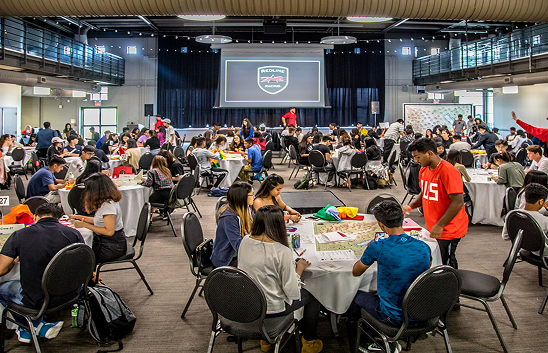
Global Delivery
Delivered consistently around the world through Eagle’s Flight’s global facilitator network.

Conferences & Kickoffs
Leadership experiences that align people around strategic priorities and accelerate momentum.
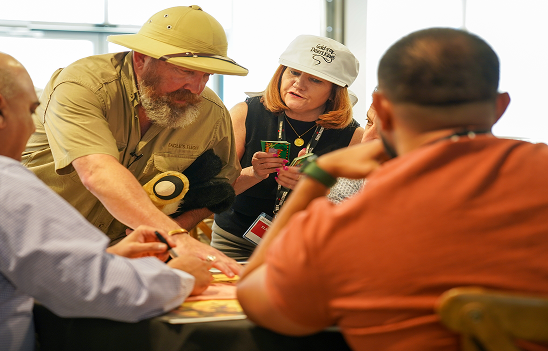
Themed Learning Experiences
Immersive themed learning experiences designed to create lasting leadership impact.
Different formats. One integrated system.
One goal: stronger leaders in the moments that matter.
Building the Capabilities for Stronger Risk Performance
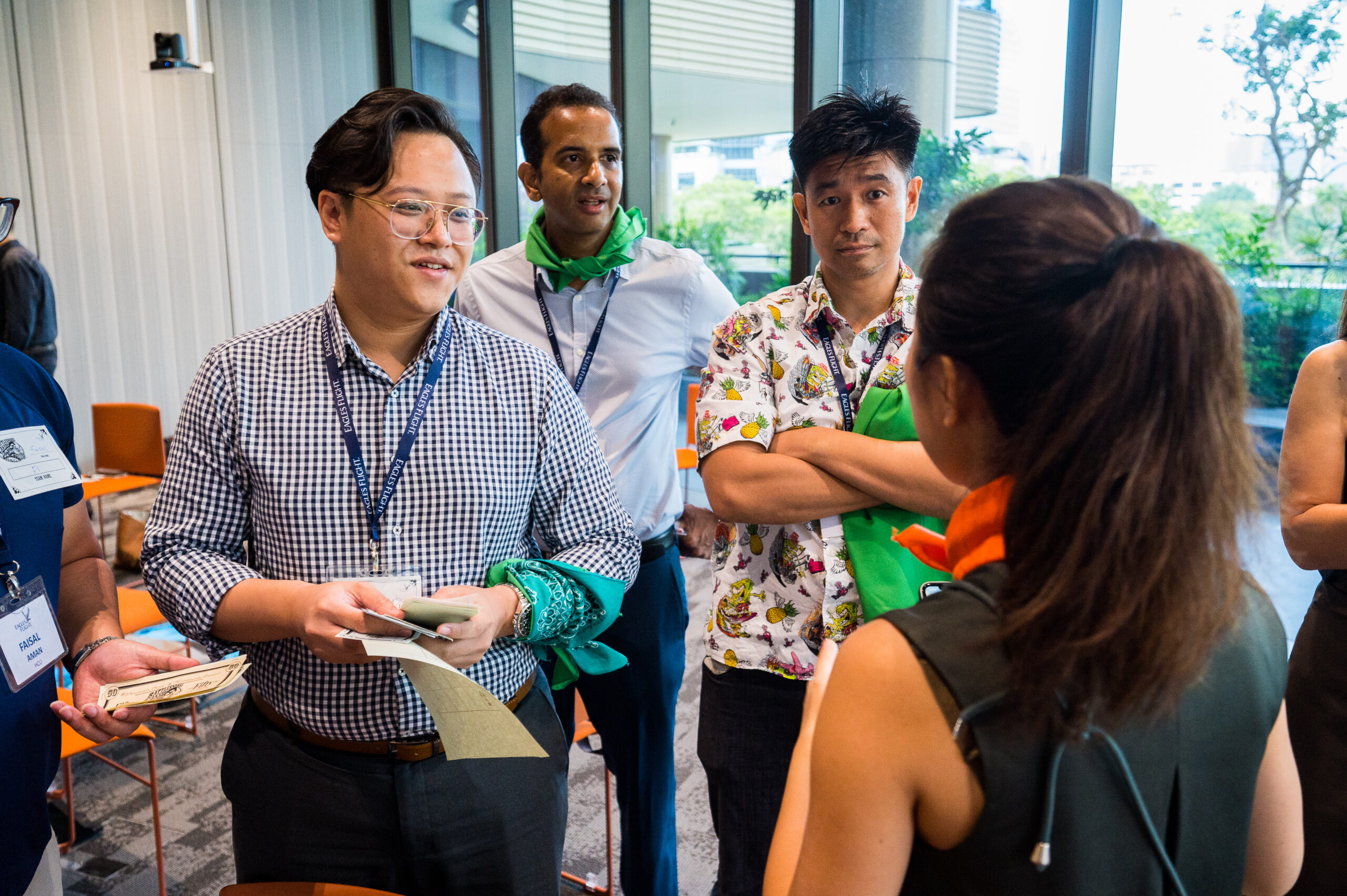
Every organisation operates in a different environment, with its own combination of priorities, expectations, and sources of risk.
Some organisations are focused on strengthening leadership accountability. Others are working to improve communication, create greater consistency across teams, reinforce operational standards, or reduce unnecessary exposure in highly regulated environments. The right journey depends on the behaviours that need to change and where behavioural variation creates the greatest organisational risk.
Eagles Flight builds capability journeys around the leadership behaviours that have the greatest influence on risk performance, combining experiential learning, practical skill development, application, and reinforcement to help those behaviours become part of everyday work.
Because stronger risk performance is built over time, not in a single learning event.
The Science of Behaviour Change
Creating lasting change requires more than information alone. It requires helping people understand why a behaviour matters, practice it in realistic conditions, and reinforce it until it becomes part of how work gets done.
Our Behavioural Science Whitepaper explores the principles that inform our approach to helping leaders and teams strengthen the behaviours that drive performance.
What Happens When Standards Meet Reality?
Risk performance is shaped in the moments where standards must be interpreted, decisions must be made, and competing priorities are present. Understanding how those moments unfold across your organisation is often the first step toward strengthening consistency and reducing unnecessary exposure.
Whether your focus is strengthening safety culture, regulatory compliance, operational reliability, customer experience, financial performance, or another form of organisational risk, stronger performance begins by strengthening the behaviours that influence decisions when they matter most.
If you’d like to explore the challenges, opportunities, and behaviours shaping risk performance in your organisation, we’d be happy to continue the conversation.
Frequently Asked Questions
Policies and procedures establish expectations, but they cannot make decisions on behalf of people. Risk emerges when standards are interpreted differently, priorities compete, or people respond inconsistently under pressure. Strengthening the behaviours that influence everyday decisions helps organisations reduce unnecessary operational, financial, reputational, and safety risk.
Behaviour-based safety (BBS) focuses on improving safety outcomes by strengthening the behaviours people demonstrate in the workplace. We believe the same principle applies more broadly. The behaviours that influence safety also affect operational reliability, regulatory compliance, financial risk, customer experience, and organisational reputation. Strengthening those behaviours helps organisations improve safety performance while reducing risk across the business.
Improving safety performance begins with clear standards, but it depends on more than policies alone. Leaders need to reinforce expectations consistently, coach sound decision-making, and create a culture where people make the right choices even when conditions become complex or priorities compete.
Leadership shapes how standards are interpreted, reinforced, and applied throughout an organisation. Leaders influence whether people speak up, make sound decisions, follow critical procedures, and respond consistently under pressure. Those everyday behaviours have a direct impact on safety, compliance, operational performance, financial risk, and organisational reputation.
Safety culture is reflected in the everyday behaviours people demonstrate when making decisions that affect themselves and others. It is shaped by what leaders reinforce, what teams accept as normal, and how consistently safety standards are interpreted and applied. Strong safety culture helps people make better decisions, especially when priorities compete and conditions become complex.
Risk culture is reflected in the behaviours people demonstrate when decisions carry consequences. It is shaped by what leaders reinforce, what teams accept as normal, and how consistently standards are applied across the organisation. A strong risk culture helps reduce unnecessary variation while improving accountability and performance.
Risk performance can be measured through both behavioural and business outcomes. Organisations often look for improvements in safety performance, operational consistency, regulatory compliance, decision quality, accountability, and reductions in operational, financial, and reputational risk over time.
We focus on the behaviours that shape performance rather than relying on information alone. Our experiential learning approach gives leaders and teams opportunities to practice making decisions, responding to pressure, and reinforcing standards in realistic situations before applying those behaviours back in the workplace. The result is stronger capability, greater consistency, and more sustainable improvements in organisational performance.
Reducing organisational risk is an ongoing process rather than a single initiative. Individual learning experiences can create important shifts in perspective, but lasting improvement comes through continued application, reinforcement, coaching, and leadership commitment as new behaviours become part of everyday work.